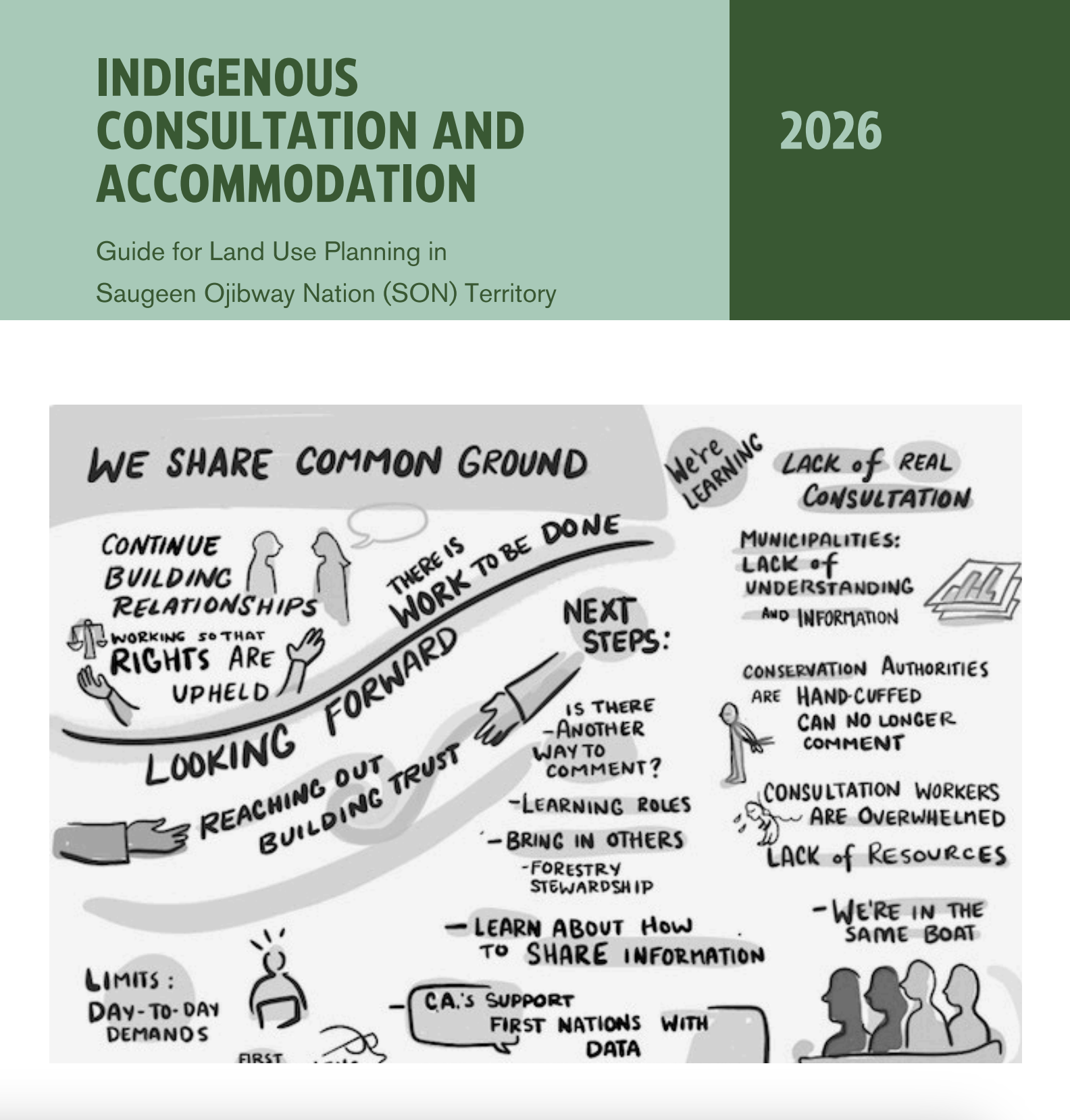
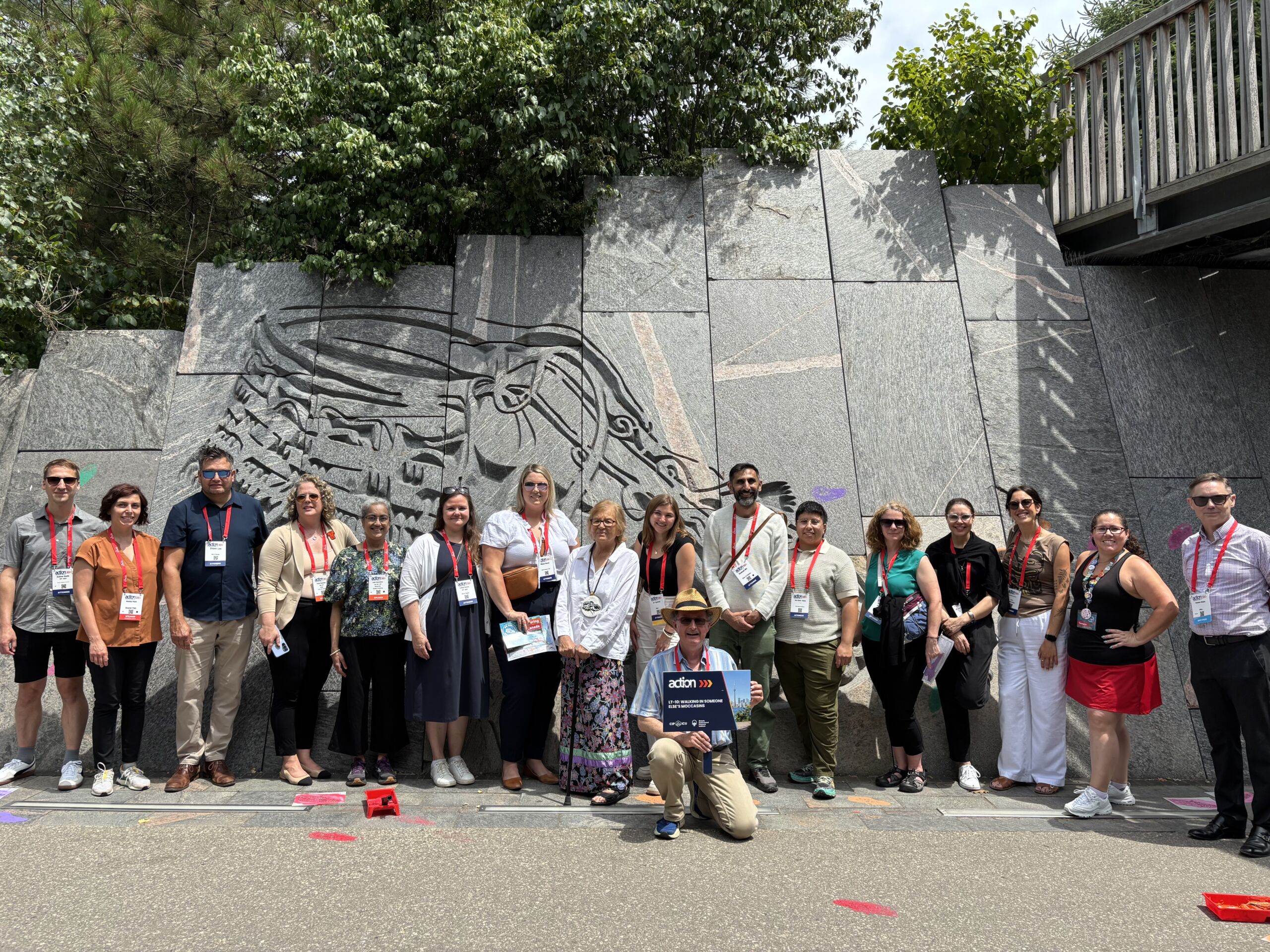
Collaborative Hub Pilot Project advances amid a shifting policy landscape
At a time of significant policy shifts, effective engagement, consultation and accommodation are an opportunity to strengthen relationships, deepen reconciliation, and collaborate on land use planning.
In her analysis of the proposed amalgamation of Conservation Authorities Susan Robertson MCIP RPP, People Plan Community — also a sitting Shared Path board member—sees a reconciliation opportunity where, “Ontario’s watershed land use planning and Aboriginal and Treaty Rights are inextricably linked.” This speaks to the founding spirit of Shared Path to foster reconciliation over the planning, enjoyment, and use of shared lands and waters.
The Collaborative Hub Pilot Project has been underway bringing together Saugeen Ojibway Nation’s Environment Office (SONEAO), upper and lower tier municipalities from Bruce County, Grey County, and Simcoe County. The pilot is convened by Shared Path with thanks to support from the Greenbelt Foundation and the Ontario Professional Planning Association (OPPI) in order to honour and uphold inherent and constitutionally protected Aboriginal and treaty rights.
Through the Hub, participants have discussed best practices for integrating these rights into Ontario’s land use planning processes in a way that supports the wellbeing and growth of society, culture, and the environment for all in SON Territory. The model builds upon the precedent set by the Muskoka Area Indigenous Leadership Table (MAILT).
The inaugural meeting of the Indigenous Collaborative Hub Pilot took place on August 27th 2025 at the Collingwood Public Library thanks to support from a 2025 Collingwood Council Community Grant and staff support from Jeff Cepukas. The town’s contribution speaks to Council’s efforts to advance Collingwood’s reconciliation goals and priorities for implementing the calls to action from the Final Report of the Truth and Reconciliation Commission of Canada.
Directors of Planning, management teams – including Strategic Initiatives and Engineering Services – and staff from the Town of Collingwood, the Town of Blue Mountains, Town of Saugeen Shores, Bruce County, Grey County, and Simcoe County joined the Shared Path Board for the launch. The goal of the first meeting was to build a common understanding of SON’s rights and interests; stronger relationships, and to proactively identify pathways for improving and bringing consistency to engagement, consultation, and accommodation tools. The need for clearer consultation guidelines and a pre-screening tool were expressed and efforts built upon last summer’s relationship building workshop.
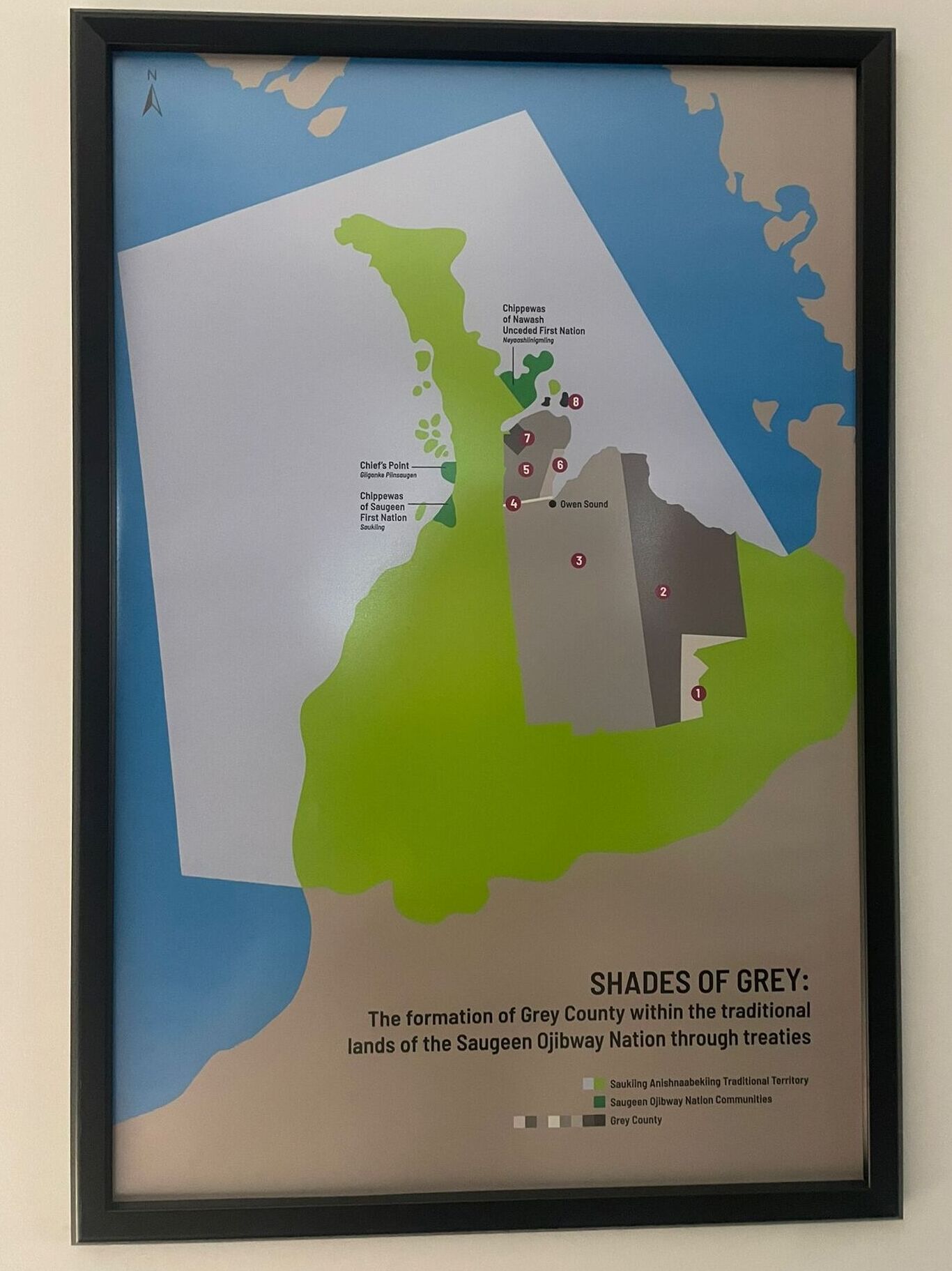
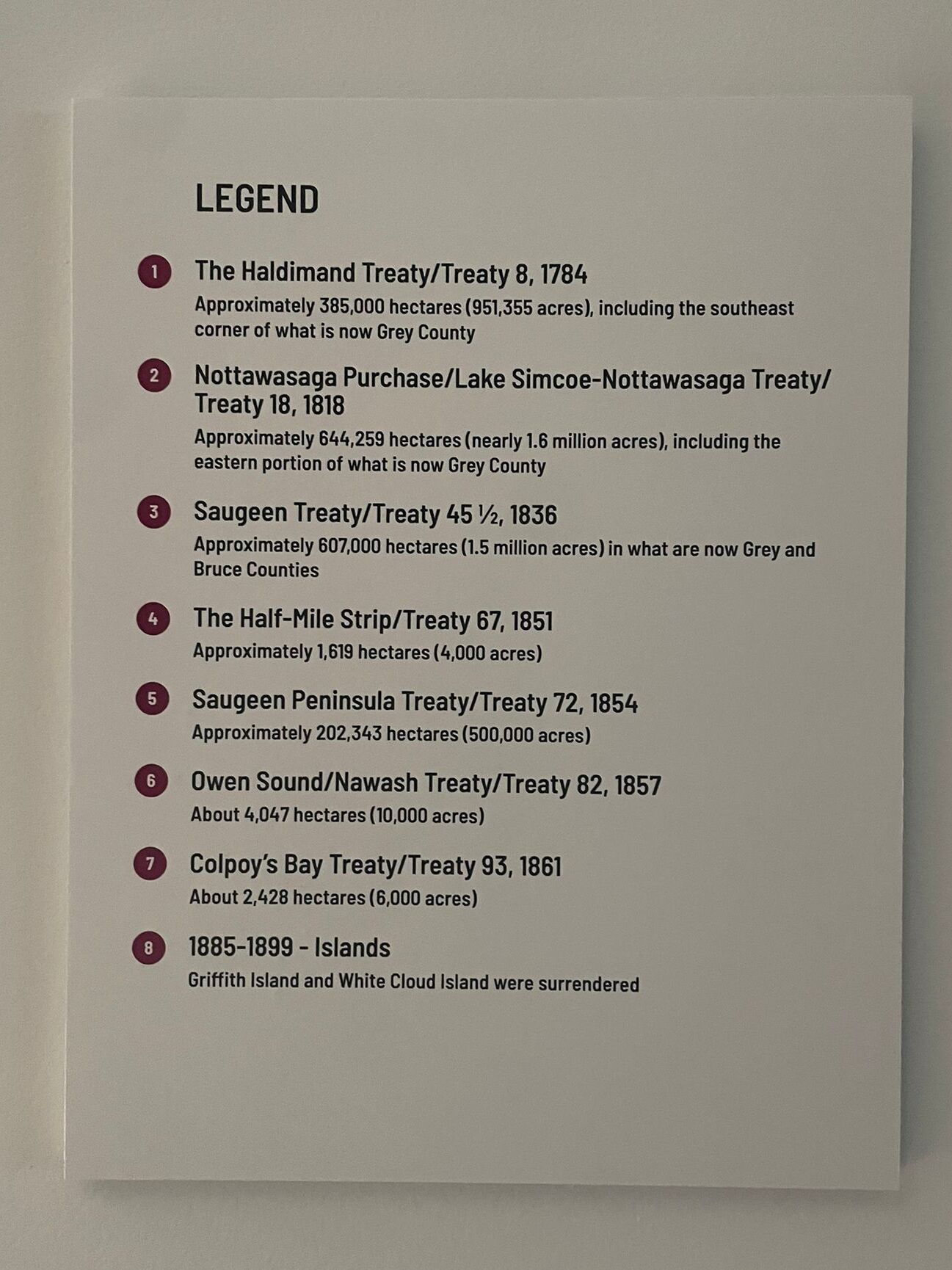
The second meeting was hosted by Grey County within Council Chambers in Owen Sound.
These two images of Treaty lands and Saugeen Traditional Territory are hung directly within Council Chambers.
A great example and reminder of ongoing reconciliation for council members.
The Vision
Discussions to date informed the draft Vision, Mission, Terms of Reference for the pilot.
To honour and uphold First Nations rights and interests in development and policy planning.
To strengthen relationships between Saugeen Ojibway Nation (Chippewas of Saugeen and Nawash First Nations) and governments in Bruce, Grey, and Simcoe Counties (Upper and Lower Tier municipalities) to begin.
To facilitate intentional collaboration to address mutual interests by establishing standardized processes for engagement, consultation, and accommodation in planning, development, infrastructure, and capital projects. Through these efforts, we are committed to ensuring land-use planning decisions consider inherent and constitutionally protected First Nation and treaty rights. These include considerations of long-term and cumulative impacts to promote environmental sustainability, uphold cultural integrity, and enhance community well-being for current and future generations.
The Work Ahead
All together, four meetings between First Nation and Municipal staff & leadership will be held in service of shared well-being and collective impact. The cultivation of stronger relationships is an overarching goal that is enacted through the regularity of meetings both within as well as outside of Hub convenings.
Shared Path will continue to facilitate intentional collaboration within the Hub through the development of clearer guidance on consultation and a clarified screening processes. These resources will in turn foster the capacity to support reconciliation, sustainable growth, and ecological resilience by offering tools and processes that center Indigenous perspectives in environmental policy and governance.
The testing phase of the materials developed will take place in early 2026. Shared Path will conduct an assessment following the fourth meeting of the Indigenous Collaborative Hub. Success will be measured both by whether the Collaborative Planning Hub is established as a forum for discussion of issues of mutual interest e.g. Service Agreements as well as whether intentional collaboration can follow from the relationships developed.
Beginning with a forum and process for understanding participants’ values and priorities, the Hub is also intended as a place to collectively examine the major pressures affecting the fragmentation of agricultural and conservation lands and key freshwater habitats. To identify what is needed to protect natural heritage, we look to the Greenbelt Foundation report on Integration of Natural Assets into Municipal Asset Management Plans. The report derives from a study to understand the processes and protocols currently in place to manage natural assets (natural or human-made elements that provide ecological and hydrological functions like urban forests). What is needed for municipalities to classify natural systems for essential services is staff capacity and tools (such as natural asset inventory templates, guidance documents, and tailored training sessions).
Regional collaboration and consistent methodologies will be essential to addressing knowledge gaps and resource limitations and we hope that the Collaborative Hub can be one forum of many to facilitate this knowledge sharing. Collaboration is not complete without incorporating First Nations priorities in planning in SON Territory – in this way the Hub offers a pathway for meaningful municipal engagement with SON and a forum to align on growth that serves the well-being of current and future generations.
The Shared Path Consultation Initiative (Shared Path) is a charitable organization started in 2017 that seeks to bridge Indigenous and municipal planning systems to support the expression of Aboriginal and Treaty Rights in land use decision making in Ontario.